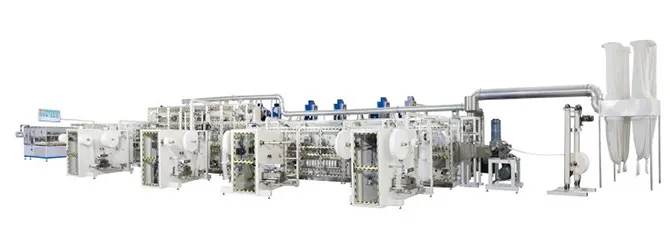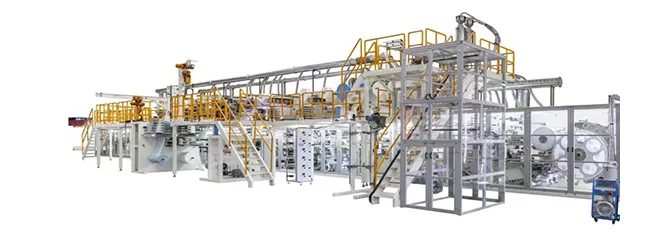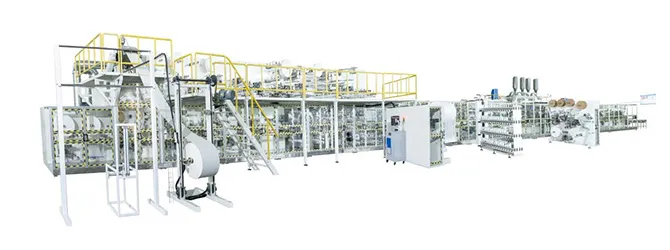

High-End Underpad Production Line Assembly at Dane Machinery
At the Dane Machinery workshop, a high-end underpad production line is taking shape ahead of Factory Acceptance Testing and delivery to the customer's factory.
From electrical control cabinets and precision roller systems to the large structural base that supports the complete line, several assembly processes are progressing in parallel. Each stage has its own accuracy requirements, while all sections must ultimately come together as one coordinated production system.
This assembly project offers a closer look at how Dane builds an underpad production line from individual mechanical and electrical systems into a complete machine ready for commissioning.
Building the Electrical Control System
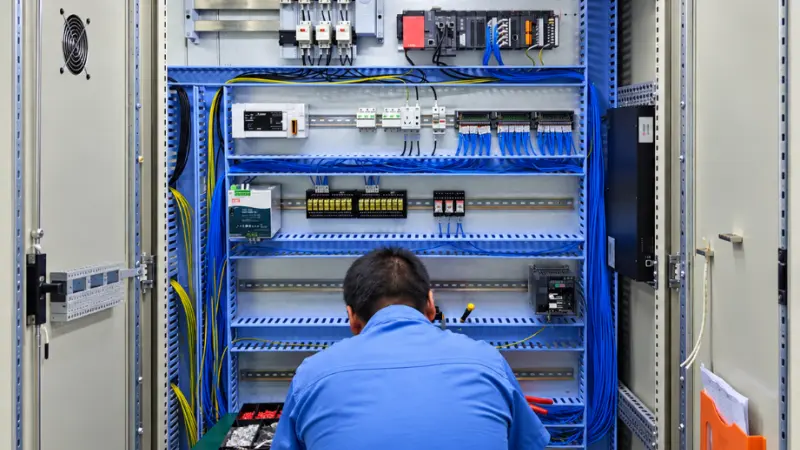
Electrical assembly is one of the first areas prepared for complete-line integration.
Inside the control cabinets, power modules, PLC controllers, relay arrays and terminal blocks are installed according to the electrical design. Control wiring and power wiring are routed separately through dedicated ducts, with cables clearly identified and securely fixed.
Each connection corresponds to a specific machine signal, sensor or operating command. The electrical team follows the wiring diagrams and assembly standards so that every cable has a defined identification and terminal position.
This structured approach becomes particularly important during commissioning. Once the complete line is powered, servo drives, sensors, pneumatic components and individual processing sections must communicate accurately through the control system.
Clear wiring and identification also provide a more practical basis for later inspection, maintenance and troubleshooting.
Precision Assembly of the Main Machine
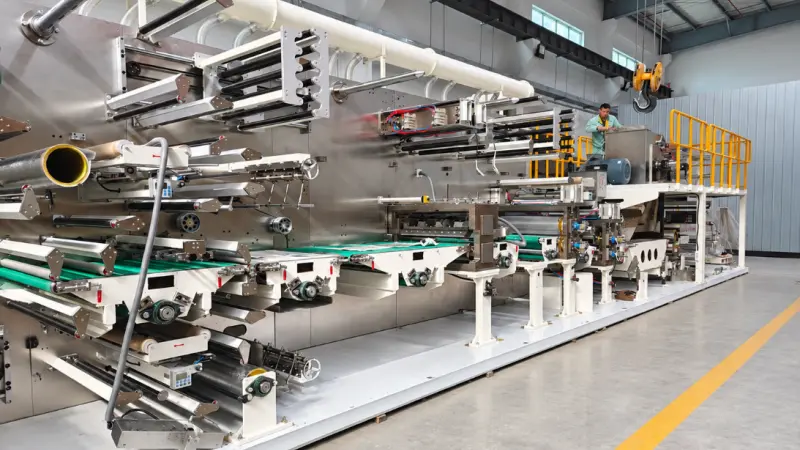
While the electrical system is being prepared, the main underpad machine enters mechanical assembly.
Pressing rollers, traction rollers and tension rollers are installed along the machine body. Conveyor sections, tension-control mechanisms, web-guiding systems and servo-drive units are positioned and connected progressively.
Roller alignment is a key part of this stage. Parallelism and concentricity are checked individually to keep the roller system within the required assembly tolerances.
The tension-control system is also initially adjusted according to the intended production parameters. Together with web guiding and servo control, this helps provide the stable material transport required when nonwoven fabric, PE film and other continuous materials pass through the line.
Mechanical drives, pneumatic circuits and other machine systems are integrated at the same time, preparing the main unit for later electrical connection and full-line commissioning.
These adjustments influence more than the operation of an individual machine section. Roller alignment, tension stability and material tracking can directly affect subsequent forming, lamination, cutting and finished-product consistency.
Establishing the Structural Reference of the Line
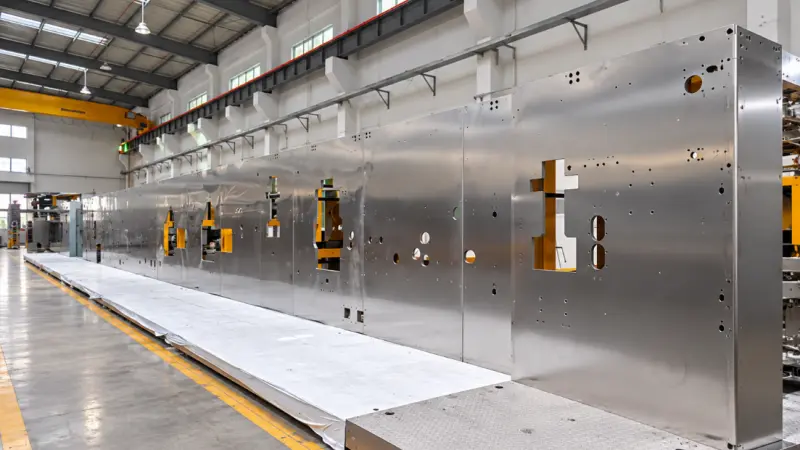
At another section of the workshop, the large stainless-steel base and frame are being prepared for installation.
The integrated base is machined on a large machining center, with key mounting surfaces and positioning holes processed to provide a common structural reference for the production line.
Pulp forming, SAP application, pressing, cutting, folding and other production units will subsequently be mounted along this structure.
Because these sections share the same mechanical reference, the accuracy of the base affects the positioning and alignment work that follows.
During installation, Dane's assembly team uses laser levels and precision measuring instruments to repeatedly check leveling and positioning. Large components are lifted and adjusted carefully before the upper machine sections are installed.
The objective at this stage is not simply to support the weight of the equipment, but to establish a stable geometric foundation for the complete line.
Three Teams Working on One Production Line
Although electrical assembly, mechanical assembly and structural installation take place at different workstations, they are part of the same production schedule.
The electrical team prepares control subsystems according to the assembly plan so that they are available when the corresponding mechanical sections reach the integration stage.
The mechanical team divides roller systems and machine sections into daily assembly tasks, allowing major installation stages to progress in sequence.
The base-frame team works ahead of the main machine assembly, preparing the structural reference required for subsequent installation.
These workstreams are coordinated through production meetings, technical briefings and inspection checkpoints.
This coordination becomes especially important as assembly advances. Structural positioning must match the mechanical layout; servo drives and sensors must match the electrical design; pneumatic and mechanical systems must be ready when the complete control system is connected.
The three teams therefore work separately on individual systems, but toward the same objective: a complete production line that can move smoothly into integrated commissioning.
From Assembly to Full-Line Testing
As the major sections come together, the project gradually shifts from component assembly to complete-line integration.
Mechanical units are installed on the verified structural base, electrical cabinets are connected to the corresponding machine sections, and servo drives, sensors, pneumatic systems and control signals are tested together.
At this point, the focus is no longer on a single roller, cabinet or machine frame. The complete production line must operate as one coordinated system.
Material feeding, tension control, servo movement, forming, cutting and other processing actions must follow the correct sequence before the machine can enter full-line testing.
The production line is now approaching the final stage of assembly and will proceed to Factory Acceptance Testing (FAT) before shipment to the customer's factory.
Precision Built into Every Stage of Assembly
For a complete underpad production line, final performance begins long before the first finished pad comes off the machine.
Electrical organization affects control and commissioning. Roller and tension accuracy influence material handling and forming stability. Structural alignment establishes the reference for the entire line. Just as importantly, these individual systems must be assembled according to one coordinated production plan.
This is how Dane approaches the assembly of a complete underpad production line—from individual components and subsystems to a fully integrated machine prepared for testing and delivery.
Dane Machinery develops production lines for underpads and other disposable hygiene products, with support covering line configuration, manufacturing, assembly, factory testing, shipment, installation and commissioning.
For underpad production projects or new disposable hygiene product manufacturing lines, contact Dane Machinery for production-line configuration and technical support.